
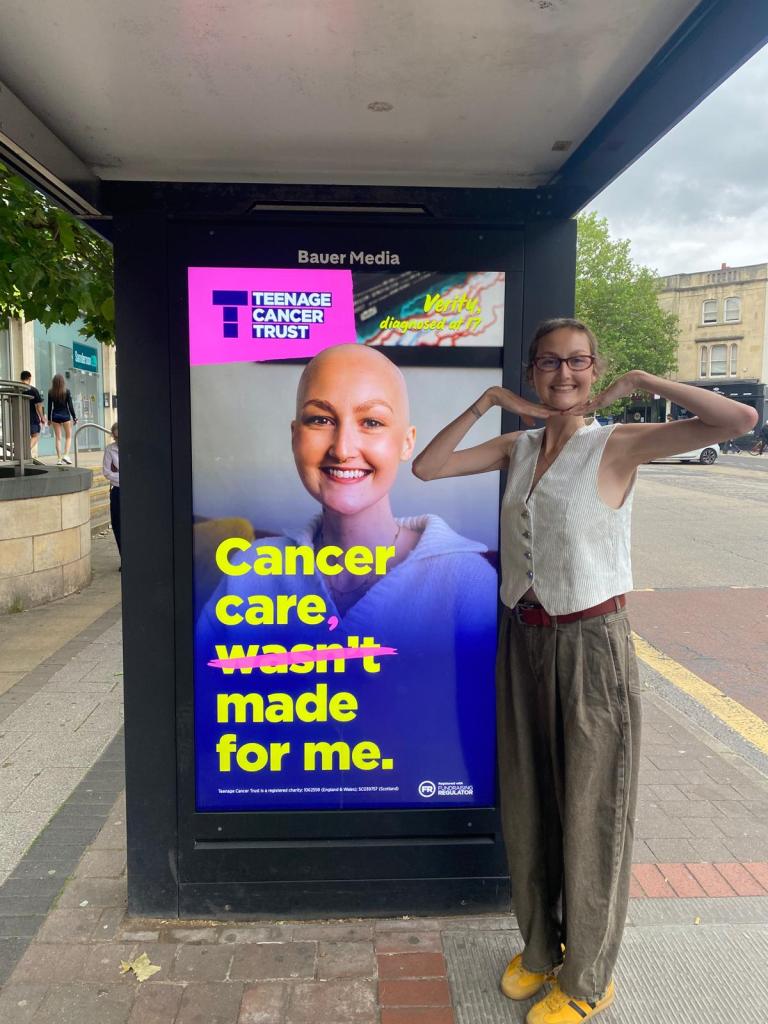
Verity Barker, 26, was told last summer she had just months to live. Her mother is now raising money for Enhertu, an off-label drug costing £4,785 a dose, in the hope it gives Verity enough time to reach a cure for an extremely rare cancer.
Nine years after doctors mistook a rare sarcoma cancer for a pregnancy, Verity Barker, 26, from Bristol, and her mother, Lydia Grant, are hoping to raise thousands of pounds for a drug they believe will give Verity enough time until a cure for Desmoplastic Small Round Cell Tumour (DSRCT) is found.
Lydia has set up a fund for Verity to receive Enhertu. She said: “Our drug options are down to one: Enhertu. According to worldwide research, and our worldwide friends with DSRCT, Enhertu works effectively to reduce tumours and give patients more time to live. As the drug has to be prescribed off-label for non-approved cancers, we need to pay for it. It has to be administered every three weeks and costs £4,785 per dose.”
Verity has had the first dose, and the aim is to raise enough money to pay for a year of treatment.
Lydia said: “There is a lot of research going on around the world to find a cure for DSRCT, and doctors are hopeful this will be achieved in the next few years. Our goal is to keep Verity alive to see this day. Her spirit and determination have already defied the odds, and she hopes and believes she will continue to defy. Verity is the most brave and inspiring person I’ve ever met, and my love for my precious child could not be any bigger.”
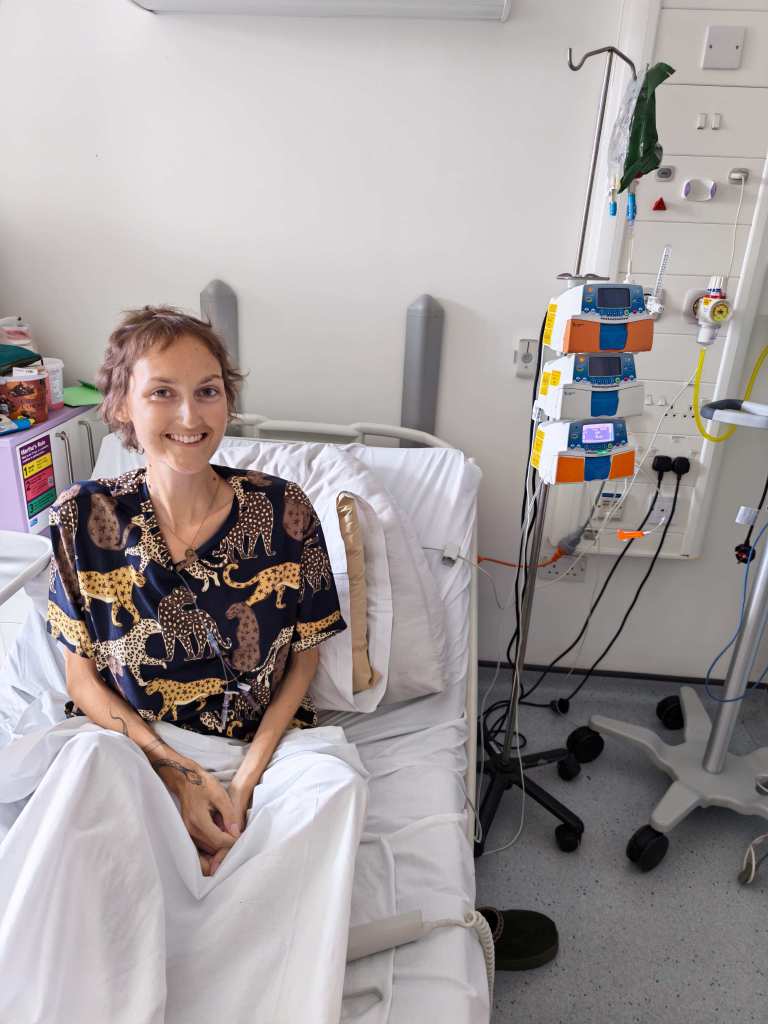
Cancer at 17, mistaken for pregnancy
Doctors thought Verity was 12 weeks pregnant, despite multiple negative tests, when she sought her GP’s advice about abnormal abdominal swelling. In fact, she had a rare sarcoma.
Verity was 17 when she went to her GP feeling bloated, tired and unable to lie down comfortably. Doctors sent her for an ultrasound, believing a baby to be the cause of the distension. The scan showed what was described as an 11cm dermoid cyst, but the growth was in fact cancer, a fact later determined by multiple surgeries and the removal of multiple tumours. It would be two years before it was correctly identified as Desmoplastic Small Round Cell Tumour (DSRCT), a very rare sarcoma, after an initial misdiagnosis of ovarian cancer.
Verity’s nine-year journey since has included major operations, chemotherapy, clinical trials and experimental drugs. At one point last year, she was told she had just months to live as her liver was failing.
The early years
After the initial scan in 2017, Verity could see the left side of her stomach protruding oddly, but the doctor’s plan was to watch, wait and intervene if necessary. One night she awoke in agony and went to A&E, where she had numerous tests and was referred to gynaecology oncology. After a multi-disciplinary meeting (MDT), the surgeons wanted to operate the next day. Verity didn’t realise the significance of this decision, nor their urgency, at the time.
Shockingly, by then the “growth” had enlarged to 25cm and had wrapped around Verity’s ovary. As well as the “growth”, her surgeons removed her left ovary and appendix, leaving her with a scar from her navel to her pubic bone.
A follow-up meeting a fortnight later saw Verity and her mother greeted by a room full of health professionals. To Verity, who was just expecting her surgeon, possibly another nurse, this felt ominous. And she was right. Pathology had found that the rugby-ball sized “growth” was a tumour and she had ovarian cancer. There were also three more tumours in her abdominal cavity, she was told, so a second operation was required. Before she was even able to digest the fact that she had cancer, she was having to cope with the knowledge of further surgery. As a precaution against her other ovary being removed, she underwent fertility treatment and had her embryos frozen, successfully securing and storing five.
The surgery was followed by outpatient chemotherapy until the end of 2017. Early in 2018, Verity was in remission, and it was then she felt she could begin to get on with life. A new life, one that looked entirely different to the one she thought she’d live, but at least there was life in her to live. She aced her A-levels and worked as a lifeguard and a climbing instructor.
In September 2018, however, Verity started to experience pain again and her anxiety skyrocketed. A scan found nothing of concern, which was to prove fateful later on. The advice from her consultant was to not live with paranoia and try to get on with it, to leave cancer behind.
Recurrence and the right diagnosis
But come May 2019, that side pain was still there, so she had another ultrasound, as well as a further CT scan, both confirming the same thing: the cancer had returned. In fact, it had been there when she had the scan the previous September. After more investigative imaging, Verity’s team decided they needed a more comprehensive look in the form of a laparoscopy, which identified 22 tumours in her abdominal cavity.
In September 2019, she underwent massive debulking surgery which took over nine hours, resulting in the successful removal of the disease. However, a full hysterectomy and bowel resection were also necessary. When she attended her post-surgical follow-up, she felt like she knew what to expect, but once again she was blindsided. A new gene test, one that hadn’t been available after her first operation, showed that instead of ovarian cancer, she had DSRCT. As a result, her entire medical team changed, as well as her future medical plan.
Verity’s new oncologist prescribed the P6 chemotherapy protocol, a regime for Ewing sarcoma, and she had this until March 2020, which saw the start of the Covid pandemic. The decision was made to halt her treatment so her immune system could recover, and monitor her with scheduled scans.
Trials, setbacks and a life-saving stent
At the end of 2021, with more spread of disease found on another CT scan, Verity was offered a place on a clinical trial for DSRCT at the Royal Marsden. This was the first time since she became ill in 2017 that she was receiving treatment specifically for her type of sarcoma. “It was overwhelming to have this,” she said, “a miracle, even.” She remained on the trial until Christmas 2023, when there was evidence that her cancer was growing again. With haste, she was put on a different drug on compassionate use.
In Spring 2025 she started losing weight and was in a lot of pain after a few months of struggling and generally feeling quite rubbish. After a week as an inpatient on the TYA ward in hospital, she was told she had pancreatitis. Her liver was monitored but her condition deteriorated drastically, with her eyes and skin turning yellow. That summer, Verity was given the shattering news that nothing more could be done for her and she had just months to live.
In the meantime, her mother had been contacting DSRCT experts and patient groups online across the globe. This led her to seek out a local private hepatobiliary consultant, who said Verity needed a stent in her liver. As he also works in the NHS, he told his team, which had initially refused to carry out the procedure, to operate on Verity. Happily, this worked.
Finding the sun-shiny moments
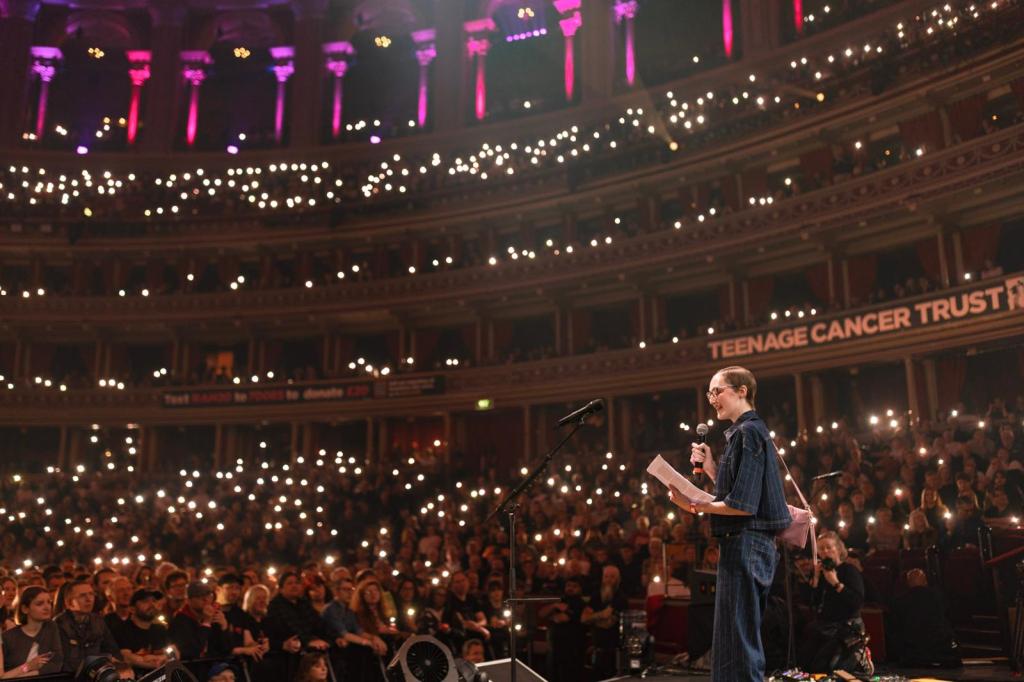
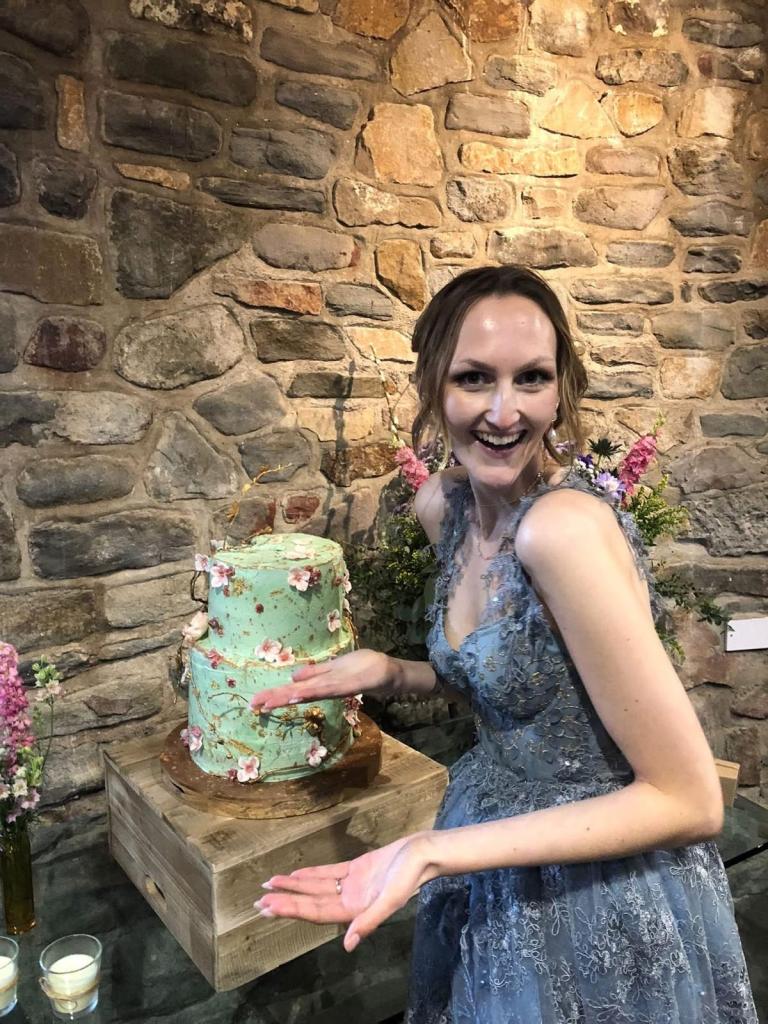
Verity married her partner Luke in 2022, despite being told her cancer was incurable. She has since embraced opportunities such as appearing in front of thousands of people at the Royal Albert Hall to speak about her cancer journey. She is also writing a book about her story. Unusually, it is told from the point of view of her pet beagle-cross Miley, whom she got when she was first diagnosed.
Looking back on nine years of illness, Verity says: “You are mourning the life you had, grieving a future you might not have now. And you have to find the sun-shiny moments,” she adds, “or what’s the point?”
She wants to help others in a similar situation and advocate for better patient care, which she has been doing through her work within Teenage Cancer Trust’s Youth Advisory Group. “If I can’t benefit directly from it, I know through me experiencing it that it will help someone else down the line, and sometimes that’s all you can do. But I’ve been doing this for nine years, and I feel like I deserve some wins without the struggle.” Verity’s motto is: “Stay as well as you can for as long as you can because things change every day and, after nine years, I feel I deserve to see, reach and receive a cure for this.”
The research behind the hope
Dr Sorrel Bickley, Sarcoma UK’s Director of Research, Policy and Support, said: “DSRCT is incredibly rare and has very few treatment options, which is why Sarcoma UK is funding two projects led by Professor Janet Shipley at the Institute of Cancer Research. One is testing whether a particular drug can modify how DSRCT cells grow, and the other is studying how DSRCT cells change and adapt to survive treatment. Both aim to find more effective and gentler treatments for young people like Verity, who so often face intensive chemotherapy and major surgery that does not work long term.”
To donate to Verity’s fund, go to: https://www.gofundme.com/f/viva-verity
Discover more from Bristol Mum
Subscribe to get the latest posts sent to your email.
